See prices From 58 EUR · Free cancellation available
Contents
A ferry to lake como means boarding one of the Navigazione Laghi boats that link every major town on the lake, from Como in the south to Colico in the north, running either as a slower boat that stops everywhere or a faster hydrofoil that skips most of them for a small supplement. Here’s what I’d actually do: treat the slow boat as the default and only trade up to the hydrofoil when you’re genuinely short on time, since the view from the open deck is a big part of why you’re on the water in the first place.
This guide covers how the network is structured, what a ticket actually costs you in choices rather than exact euros, how to make sense of a printed timetable, and when a day pass beats buying single tickets. Once you know the system, the route-specific pages on this site cover each crossing in detail, and if you’d rather see what each of this site’s eight tracked tours and tickets actually includes first, here’s the full lineup compared side by side.
What Is the Lake Como Ferry, Exactly?
The Lake Como ferry is the public boat network run by Navigazione Laghi, Italy’s state ferry authority for the lake, connecting roughly thirty piers between Como and the lake’s northern tip at Colico. It isn’t a single boat line but a mix of slow ferries, fast hydrofoils, and a vehicle ferry on one specific crossing, all sharing the same ticketing system.
I’d think of it less as “the ferry” and more as a bus network that happens to run on water. Once that clicks, the rest of the system, the zones, the ticket classes, the day passes, makes a lot more sense than if you’re expecting one boat on one fixed loop.
That mental shift matters because most first-time visitors arrive expecting a single sightseeing boat, buy one ticket, and assume it covers the whole lake. It doesn’t. Each leg between two piers is its own fare, which is exactly why understanding the zone structure before you travel saves you from overpaying or, worse, buying the wrong ticket for the boat you actually wanted.
Check prices & dates
Ready to visit?
Book your tickets in advance: popular time slots sell out.
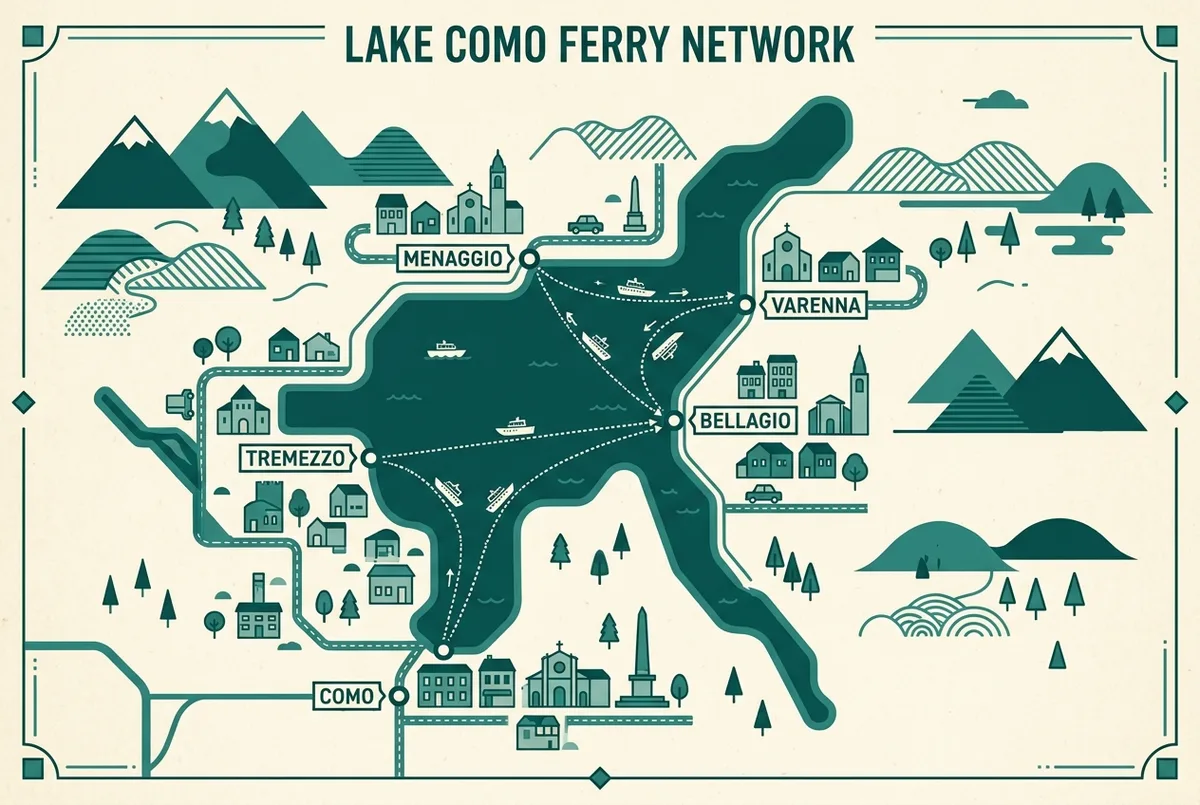
Navigazione Laghi splits the lake into fare zones and runs two kinds of passenger boat on most routes: the slow boat (“battello”), which stops at nearly every pier, and the hydrofoil (“aliscafo”), which skips minor stops to cut travel time. A separate vehicle ferry runs only on the short Cadenabbia to Bellagio to Varenna triangle, carrying cars as well as foot passengers.
My honest advice is to pick your boat type by what you actually want from the trip. If the crossing itself is part of the sightseeing, like the short hop from Varenna to Bellagio, the slow boat’s extra minutes cost you almost nothing. If you’re racing to make a lunch reservation in Bellagio, the hydrofoil earns its higher fare.
What’s the Difference Between a Hydrofoil and a Slow Ferry on Lake Como?
A hydrofoil lifts partly out of the water and skips most intermediate piers, cutting a given crossing by roughly a third to a half compared to the slow boat, for a modest supplement on top of the standard fare. The slow boat stops everywhere along the route and keeps you on an open deck, which matters more than the time difference suggests.
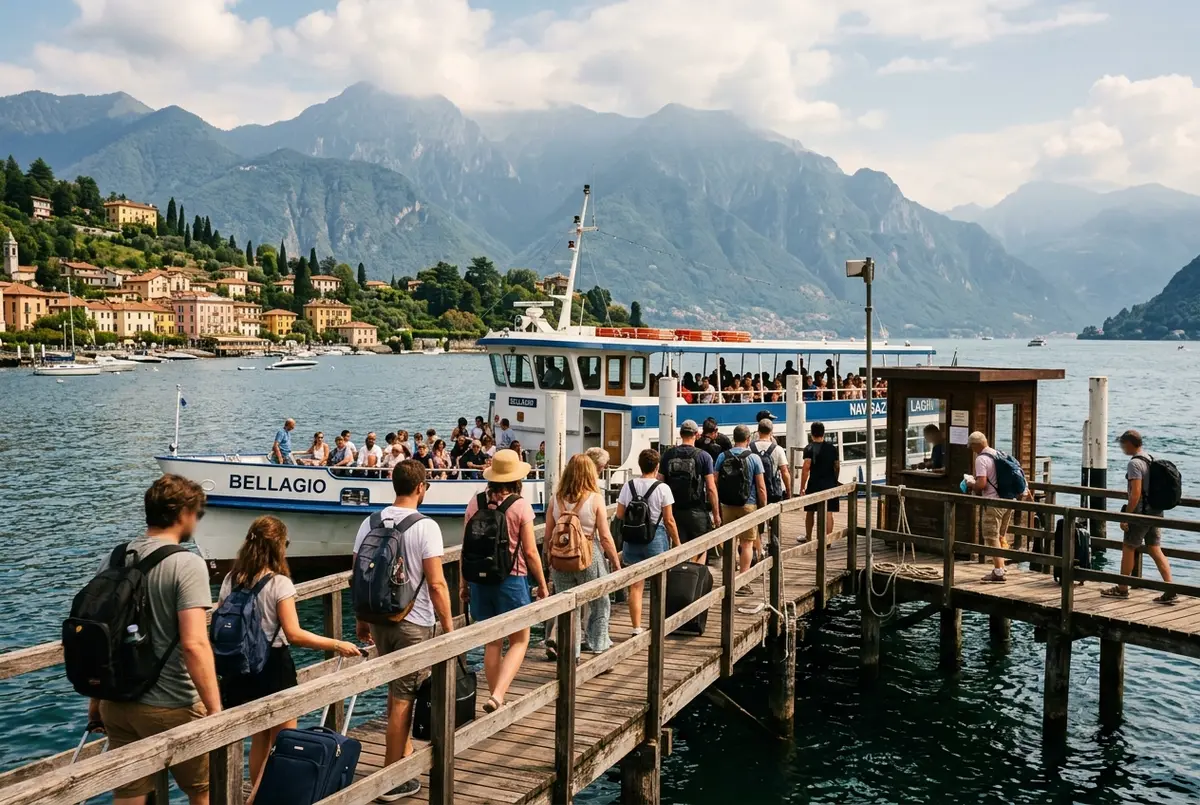
I’d pick the slow boat on any route under half an hour almost automatically, since the time you save on the hydrofoil barely covers the walk to a second coffee, and the open-deck views on a boat like lake como ferry service are genuinely one of the best photo opportunities on the whole trip. Save the hydrofoil for the longer hauls, like Como to Bellagio, where the time saved is real.
How Much Do Lake Como Ferry Tickets Cost?
Lake Como ferry fares are priced by zone and distance rather than a single flat rate, so a short hop between neighboring towns costs noticeably less than a crossing spanning several zones, and the hydrofoil supplement adds a small amount on top of either. Exact fares shift from year to year, so I’d check the current price list on the official Navigazione Laghi site before you travel rather than trust a number printed anywhere else, this site included.
What I can say with confidence is the pattern: short hops are cheap enough that buying individual tickets rarely feels like a mistake, while a day spent hopping between four or five towns is where the math starts to favor a pass. Lake Como ferry tickets and day pass: prices and how to buy breaks down exactly where that line sits.
Is a Lake Como Ferry Day Pass Worth It?
A day pass is worth it once you’re taking three or more rides in a single day within the same zone, since the per-ride cost of individual tickets adds up fast on a lake where hopping between towns is half the point of visiting. For a single out-and-back crossing, buying two single tickets is usually cheaper.
I’d only buy the day pass if your plan genuinely involves multiple towns in one day, Como in the morning, Bellagio for lunch, Varenna by late afternoon, say. If you’re doing one round trip to one village, skip it and save the math for a busier day. The full breakdown of which pass covers which towns is in the ferry tickets and day pass guide.
How Do You Read a Lake Como Ferry Timetable?
A Navigazione Laghi timetable lists departure times down the left column and pier names across the top, with symbols marking which departures are slow boats, which are hydrofoils, and which run only on certain days or seasons. The trap most first-time visitors hit is missing a footnote that a particular sailing only operates in summer or only on weekends.
My advice is to photograph the printed timetable at the pier the moment you arrive, or screenshot the current PDF from the official site before you leave your hotel, since schedules thin out noticeably in shoulder season and a boat you assumed ran hourly might run every two hours instead. Always check the current version rather than relying on a schedule from a previous trip.
Which Lake Como Ferry Route Should You Take?
The route that matters depends entirely on where you’re based and which towns you want to see. Varenna to Bellagio is the shortest and most frequent crossing on the lake, Como to Bellagio is the longer run for a Como-based day, and Bellagio’s own terminal is the hub where the most lines converge if you’re staying there.
If you’re on the quieter west shore, Varenna and Menaggio covers that corridor, and Tremezzo, Lenno and Cadenabbia rolls up the smaller stops near Villa Carlotta and Villa del Balbianello that don’t individually get much search volume but matter if you’re villa-hopping. I’d pick your base town first and let that decide your route, rather than the other way around.
Can You Bring a Car on the Lake Como Ferry?
Yes, but only on one specific crossing: the vehicle ferry connecting Cadenabbia, Bellagio and Varenna, which is the only stretch of the lake where a car ferry operates. Every other route on the network is passenger-only, including the hydrofoils and slow boats.
I’d only drive onto this ferry if the alternative is a long drive around the southern end of the lake, since the triangle crossing genuinely saves real time for drivers moving between the east and west shores. For foot passengers, this crossing works exactly like any other Varenna or Bellagio route, just with cars sharing the deck.
Should You Book Lake Como Ferry Tickets Online or at the Kiosk?
For short, popular crossings like Varenna to Bellagio, buying at the kiosk right before departure is usually fine outside of peak midday hours in July and August, since boats run frequently and queues move fast. For longer routes or the only sailing of the day on a quieter pier, I’d buy ahead if the official booking channel allows it for that specific line.
My honest take is that the ferry network is far less likely to sell out than a guided boat tour, so the convenience of a kiosk ticket usually outweighs any benefit from booking online days ahead. Save the advance booking for a guided boat tour if your schedule is tight and you need a guaranteed seat.
Is the Ferry or a Private Boat Tour Better for Seeing Lake Como?
The public ferry is cheaper and gets you point to point on a fixed schedule with no narration, while a private or shared boat tour costs more but adds a guide, a flexible route, and often a stop ashore somewhere the ferry doesn’t go. I’d choose the ferry if your goal is simply to get from one town to another, and a boat tour if you want the lake explained to you while someone else handles the route.
Does the Ferry Work for a Milan Day Trip to Lake Como?
Yes, and it’s exactly how most of the guided Milan day trips are built: a train from Milan into Como, then the ferry or a boat cruise to hop between Bellagio and Varenna before heading back. If you’re planning this yourself rather than booking a packaged day trip, the ferry timetable is the piece you need to plan around most carefully.
I’d build a Milan-based day around the ferry’s morning departures rather than assuming you can wing it, since missing a connection on a one-day visit costs you a town you won’t get back. Lake Como day trip from Milan: complete planning guide covers the full itinerary if you’d rather see how the pieces fit together before committing to a route.
Does the Lake Como Ferry Run Year-Round?
Yes, Navigazione Laghi runs a reduced winter timetable on most routes and a much fuller summer schedule from roughly spring through early autumn, when extra hydrofoils and slow boats get added to cope with demand. Some of the smaller west-shore piers see sailings drop to just a handful a day outside peak season.
I’d double-check the season before locking in a winter or shoulder-season itinerary built around hopping between several towns in one day, since a route that runs every twenty minutes in August might run once an hour, or not at all on a given pier, in January. This matters most for the smaller stops covered in west shore ferries: Tremezzo, Lenno and Cadenabbia, where the timetable thins out first.
Is the Lake Como Ferry Safe for Kids and Non-Swimmers?
Yes, the standard passenger boats are safe for families and non-swimmers, with enclosed lower decks, life jackets available on board, and no expectation that anyone swims or boards anything other than a stable, enclosed vessel. The open-air upper deck on a slow boat is the one spot I’d watch younger kids a bit more closely, simply because it has less in the way of a barrier than the enclosed cabin below.
My advice for families is to sit on the upper deck for the views when the weather’s calm, then move below if it’s windy, cold, or your kids are too young to sit still near open railings. None of this requires planning ahead, since both decks are open to any ticket holder on every standard crossing.
Is the Lake Como Ferry Affected by Weather?
The ferry network generally keeps running in light rain and normal wind, since the boats are built for exactly these conditions, but genuinely rough weather, strong storms or heavy fog, can delay or cancel specific sailings, especially hydrofoil services that handle choppy water less comfortably than the slower boats.
My honest advice is to check conditions the morning of a planned crossing if the forecast looks severe, and build a little flexibility into any single-day itinerary that depends on multiple ferry legs. A cancelled sailing on an otherwise frequent route is rare, but it’s not impossible, and a backup plan costs you nothing if you don’t end up needing it.
What Should You Bring on a Lake Como Ferry Ride?
A light jacket is worth packing even on a warm day, since the breeze on open water runs noticeably cooler than on land, especially on the upper deck of a slow boat moving at speed. Sun protection matters too, since the glare off the water is stronger than it looks from shore.
I’d also keep your ticket or pass somewhere easy to reach rather than buried in a bag, since staff do check tickets on board and at some piers before you’re allowed to walk down to the dock. Beyond that, there’s genuinely nothing special to prepare, this is public transport, not a guided excursion with its own packing list.
How Early Should You Arrive Before a Lake Como Ferry Departs?
I’d arrive at the pier ten to fifteen minutes before a scheduled departure on a normal day, and closer to thirty minutes ahead in peak summer when the most popular crossings draw a real queue at the ticket window. Boats on busy routes rarely wait for latecomers, since another sailing is usually close behind.
If you’re catching the last ferry of the day on a quieter pier, I’d build in extra buffer regardless of season, since missing that one sailing can mean a long wait or an expensive taxi rather than just a short delay.
Frequently Asked Questions
Is there a ferry service on Lake Como?
Yes, Navigazione Laghi runs a full public ferry network connecting around thirty piers between Como and Colico, with slow boats, hydrofoils, and one vehicle ferry crossing.
How much does the Lake Como ferry cost?
Fares are priced by zone and distance, so a short hop costs less than a multi-zone crossing, and the hydrofoil carries a small supplement over the slow boat. Check the current official price list before you travel since fares change over time.
Is the Lake Como ferry faster than driving?
On routes between towns on opposite shores, the ferry is usually faster and far less stressful than driving around the lake’s winding roads, especially in peak season traffic.
Do I need to book the Lake Como ferry in advance?
Usually not for short, frequent routes, though I’d check availability ahead for the only sailing of the day on a quieter pier or during a major local event.
Can I use one ticket for multiple Lake Como ferry rides?
Only if you buy a day pass or multi-ride pass covering your zone. A standard single ticket covers one ride between two specific piers only.